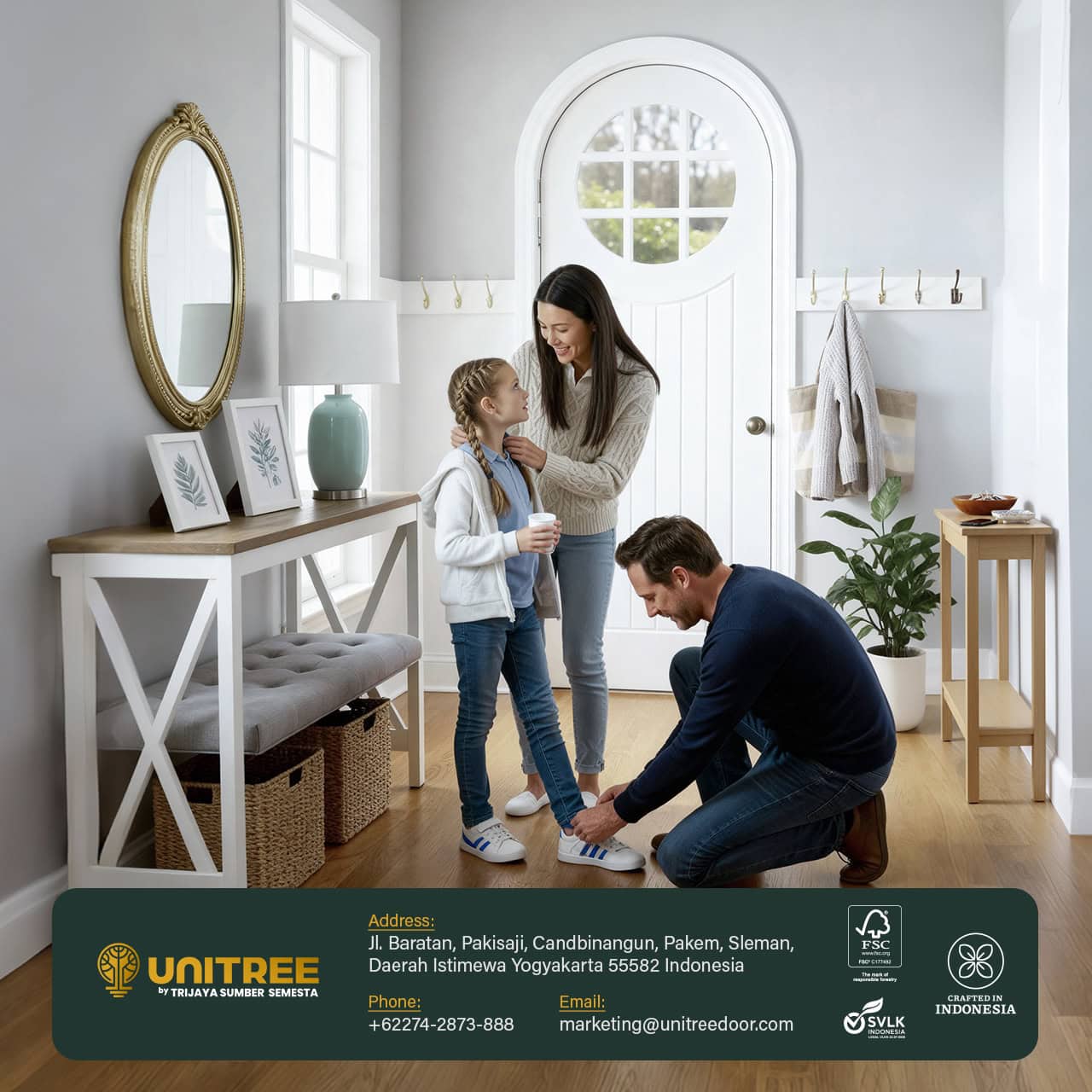
The architectural impact of wooden bi-folding doors lies in their ability to dynamically alter spatial flow, natural light, and thermal transitions. By utilizing dimensionally stable engineered timber cores clad in premium natural veneers, architects can create characterful, wide-span entrances that seamlessly merge indoor and outdoor environments without compromising long-term structural integrity.
Why this matters: A door is more than a simple threshold; it is the soul of a space and the first tangible introduction to the world you have built. While modernism often defaults to cold metals and expansive glass, integrating natural timber into large-scale bi-folding systems introduces an unmatched humanist warmth. It transforms a functional opening into a characterful architectural statement—one that demands a synergy of artistry and meticulous precision engineering to execute flawlessly over wide spans.
How Do Wooden Bi-Folding Doors Transform Spatial Dynamics?
Wooden bi-folding doors function as "dynamic walls" that redefine the grammar of a room by allowing for total aperture control. Unlike standard swing doors or fixed glazing, these systems can completely retract, removing the physical and visual barriers between the interior sanctuary and the external landscape to expand a building's usable footprint.
In practical terms, this flexibility allows architects to manipulate the environmental performance and social atmosphere of a space through:
- Enhanced Daylighting: Maximizing the penetration of natural light deep into the floor plate, reducing reliance on artificial illumination.
- Passive Cross-Ventilation: Facilitating significant airflow to improve Indoor Air Quality (IAQ) and reduce cooling loads in temperate and tropical climates.
- Visual Continuity: Creating a "blurred boundary" where flooring materials and ceiling planes appear to extend infinitely, making smaller footprints feel expansive.
According to the Architectural Woodwork Institute (AWI), the successful integration of large-scale moving partitions requires strict adherence to clearance tolerances to ensure that the "quiet details"—the silent, balanced operation of the hardware—remain consistent throughout the building's lifecycle.
Why Does Dimensional Stability Matter for Wide-Span Timber Systems?
Dimensional stability is the most critical technical factor in wooden bi-folding doors because large timber panels are inherently susceptible to hygroscopic movement. When exposed to fluctuating humidity, solid wood can warp, bow, or twist, leading to "binding" within the track system and compromising the building envelope’s weather seal.
To mitigate this, high-performance bi-folds utilize an engineered core rather than solid lumber. For example, the Nusantara Core technology developed by PT. Trijaya Sumber Semesta (TSS) utilizes a specific "1+3" recipe—combining one finger-jointed strip with three butt-jointed strips of Albasia Falcata (Sengon) per layer. This cross-laminated lumber (CLL) construction ensures that the grain of each layer is orthogonal to the next, effectively canceling out the internal stresses that cause warping.
Analysis indicates that cores kiln-dried to a Moisture Content (MC) of 8-12% and achieving a Modulus of Rupture (MOR) of 25-30 MPa provide the necessary stiffness-to-weight ratio. This allows for tall, wide panels that remain perfectly planar while being light enough to prevent excessive wear on the overhead track hardware.
Engineered Core vs. Traditional Solid Wood for Bi-Folds
| Feature | Traditional Solid Wood | Nusantara Core (Engineered CLL) |
|---|---|---|
| Weight | Heavy (35+ kg/unit); stresses hardware | Lightweight (25-30 kg/unit); fluid operation |
| Dimensional Stability | High risk of warping across wide spans | Highly stable; orthogonal grain resists movement |
| Environmental Impact | High consumption of old-growth timber | High yield; FSC-certified plantation timber |
| Architectural Flexibility | Limited by wood species characteristics | Limitless; stable core accepts any premium veneer |
| Durability | Prone to seasonal binding | Maintains precise tolerances over time |
How Does Species Selection Influence Architectural Character?
The aesthetic impact of a bi-folding system is dictated by the surface veneer or solid facing, which serves as the "canvas" of the entrance. Because the engineered core provides the structural integrity, architects are free to select wood species based on the intended energy and "soul" of the space rather than purely on the mechanical limitations of the timber.
Selecting the right species involves mapping natural characteristics to architectural intent:
- For Dramatic Depth: Merbau is often specified for its bold interlocking grain and deep reddish-brown tones. It provides a luxurious, grounded presence ideal for high-end hospitality foyers.
- For Contemporary Sophistication: Sungkai offers a pale, beautiful grain with a natural sheen. It is frequently used in modernist residential projects to achieve a bright, "Scandi-Indo" aesthetic.
- For Classic Refinement: Mahogany remains a staple for classic luxury, valued for its fine, uniform texture that deepens in character as it ages.
- For Serene Minimalism: Albasia or Durian provides pale, consistent tones that offer an understated warmth, perfect for spaces where the architecture emphasizes light and shadow over decorative ornament.
What Are the Specification Requirements for Premium Projects?
Specifying wooden bi-folding doors for premium residential or commercial developments requires verification of both material legality and technical performance. Architects must ensure that the products meet international standards to guarantee longevity and compliance with green building certifications like LEED (Leadership in Energy and Environmental Design) or BREEAM.
To ensure a "Promise of Responsibility," specifiers should verify the following:
- Sustainability Certifications: Look for Forest Stewardship Council (FSC® C177492) certification and the Indonesian Timber Legality Verification System (SVLK). These ensure the timber is ethically sourced from responsibly managed plantations.
- Precision Engineering: High-performance bi-folds require precision Computer Numerical Control (CNC) machining. This ensures that hardware cutouts—for hinges, pivots, and locking points—are accurate to within fractions of a millimeter, preventing the "sag" often associated with inferior timber doors.
By prioritizing these technical foundations, the architect ensures that the "characterful entrance" remains a functional masterpiece for decades, embodying the principle of "Humble Excellence" in every movement.
FAQ
What is the maximum width for a wooden bi-folding door panel?
While hardware capacity varies, utilizing a lightweight engineered core like Nusantara Core typically allows for panel widths of 1000mm to 1200mm per leaf. Keeping the weight between 25-30 kg per unit is essential to ensure fluid, one-handed operation and to prevent long-term track deflection.
Do wooden bi-folding doors warp over time?
Traditional solid wood doors are highly susceptible to warping in fluctuating climates. However, doors constructed with cross-laminated engineered cores, kiln-dried to an 8-12% moisture content, are designed to remain dimensionally stable. The orthogonal grain orientation counteracts natural wood movement, preventing binding.
How do timber bi-fold doors affect building energy efficiency?
Timber is a natural thermal insulator with significantly lower thermal conductivity than aluminum. Wooden bi-folding doors act as a natural thermal break, reducing heat transfer between the interior and exterior. When combined with High-Pressure Laminate (HPL) or High Moisture Resistant (HMR) facings, they provide excellent durability and thermal performance.

